Sub menu editing

Drop Down MenusCSS Drop Down MenuPure CSS Dropdown Menu

Monday, June 3, 2019

Machine Vision


Machine vision (MV) is the technology and methods used to provide imaging-based automatic inspection and analysis for such applications as automatic inspection, process control, and robot guidance, usually in industry. Machine vision is a term encompassing a large number of technologies, software and hardware products, integrated systems, actions, methods and expertise. Machine vision as a systems engineering discipline can be considered distinct from computer vision, a form of computer science. It attempts to integrate existing technologies in new ways and apply them to solve real world problems.

The overall machine vision process includes planning the details of the requirements and project, and then creating a solution. During run-time, the process starts with imaging, followed by automated analysis of the image and extraction of the required information. The information extracted can be a simple good-part/bad-part signal, or more a complex set of data such as the identity, position and orientation of each object in an image. The information can be used for such applications as automatic inspection and robot and process guidance in industry, for security monitoring and vehicle guidance.

            Machine vision is practically the only term used for these functions in industrial automation applications; the term is less universal for these functions in other environments such as security and vehicle guidance. Machine vision as a systems engineering discipline can be considered distinct from computer vision, a form of basic computer science; machine vision attempts to integrate existing technologies in new ways and apply them to solve real world problems in a way that meets the requirements of industrial automation and similar application areas. The term is also used in a broader sense by trade shows and trade groups such as the Automated Imaging Association and the European Machine Vision Association.

Sunday, June 2, 2019

Cryogenic Treatment


A cryogenic treatment is the process of treating work pieces to cryogenic temperatures (i.e. below −190 °C (−310 °F)) in order to remove residual stresses and improve wear resistance on steels. In addition to seeking enhanced stress relief and stabilization, or wear resistance, cryogenic treatment is also sought for its ability to improve corrosion resistance by precipitating micro-fine eta carbides, which can be measured before and after in a part using a quantimet.

The process has a wide range of applications from industrial tooling to the improvement of musical signal transmission. Some of the benefits of cryogenic treatment include longer part life, less failure due to cracking, improved thermal properties, better electrical properties including less electrical resistance, reduced coefficient of friction, less creep and walk, improved flatness, and easier machining.

Cryogenic machining is a machining process where the traditional flood lubro-cooling liquid (an emulsion of oil into water) is replaced by a jet of either liquid nitrogen (LN2) or pre-compressed carbon dioxide (CO2). Cryogenic machining is useful in rough machining operations, in order to increase the tool life. It can also be useful to preserve the integrity and quality of the machined surfaces in finish machining operations. Cryogenic machining tests have been performed by researchers since several decades, but the actual commercial applications are still limited to very few companies. Both cryogenic machining by turningand milling are possible.

Civic Technology


Civic technology, or civic tech for short, is technology that enables engagement, participation or enhances the relationship between the people and government by enhancing citizen communications and public decision, improving government delivery of service, and infrastructure. It encompasses mainly information technology and includes civic applications, platforms supporting government bodies, institutions and other software that enables those goals. Civic technology has had increasing promise and importance with time. In the Information Age, digital communications have become the foundation for political and economic exchanges. As advanced technologies have become commonplace in society and available throughout the population, many local governments and officials have begun utilizing them for public outreach and feedback. Specifically, the Internet is being used more for communication between governing officials and citizens.

Civic technology is contested to a certain extent, especially with regards to companies engaged in the sharing economy, such as Uber, Lyft, and Airbnb. For example, Airbnb's ability to provide New York residents with housing during the aftermath of Superstorm Sandy could be considered a form of civic technology. However, Nathaniel Heller, Managing Director of the Research for Development Institute's Governance Program contends that for-profit platforms definitively fall outside of the scope of civic technology: Heller has said that "while citizen-to-citizen sharing is indeed involved, the mission of these companies is focused on maximizing profit for their investors, not any sort of experiment in building social capital." From a goal perspective, civic technology can be understood as “the use of technology for the public good”.

Citizens are also now given access to their representatives through social media. They are able to express their concerns directly to government officials through sites like Twitter and Facebook. There have even been past cases of online voting being a polling option for local elections, which have seen vastly increased turnouts, such as in an Arizona election in 2000 which saw a turnout double that of the previous election. It is asserted though that civic technology in government provides for a good management technique but lacks in providing fair democratic representation. Social media is also becoming a growing aspect of government, towards furthering the communication between the government and its citizenry and towards greater transparency within the governmental sectors.

Saturday, June 1, 2019

Growing Demand for Smart TVs


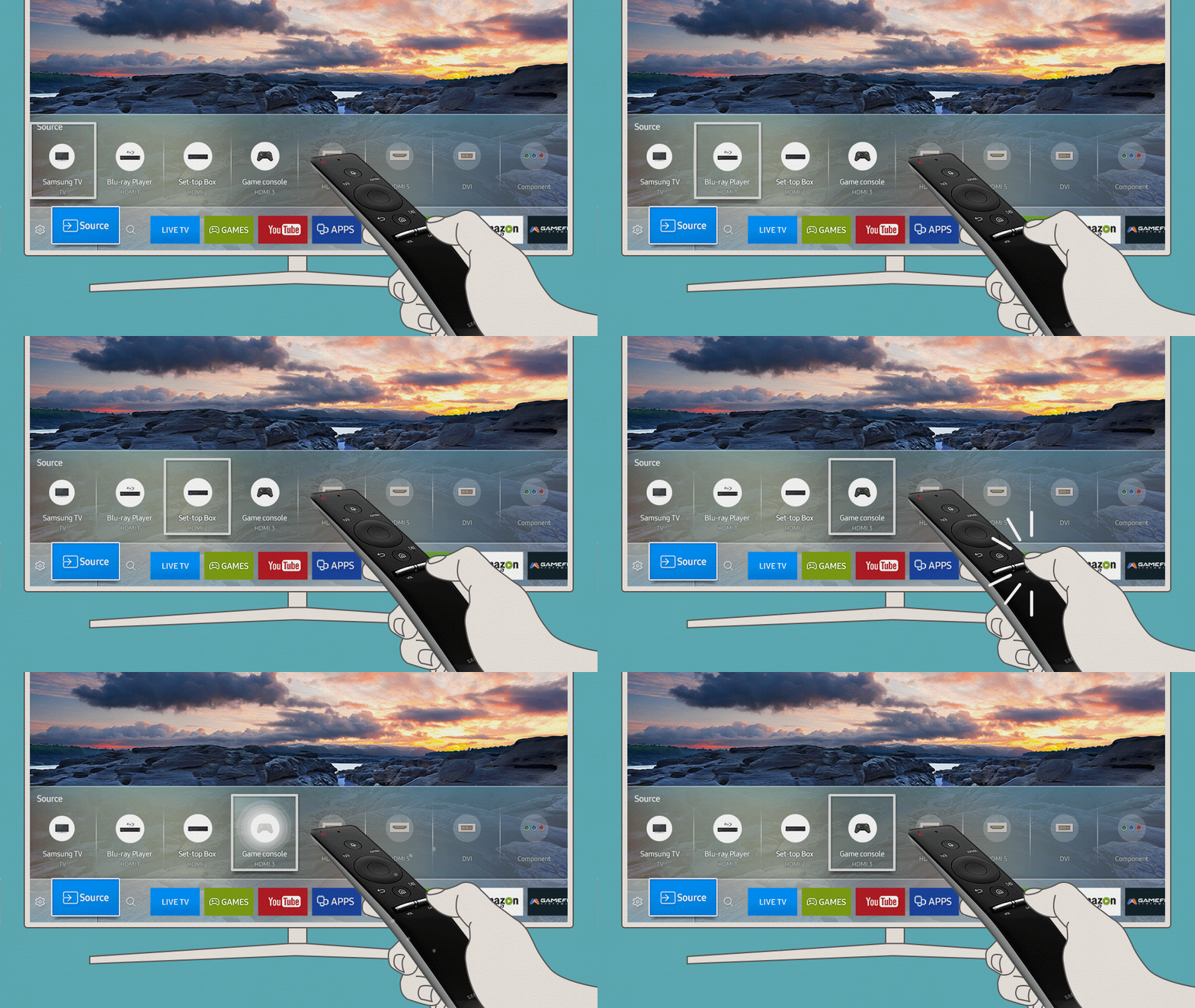
Smart TV is basically a concurrence between computer and social TV which allows users to use all features presents in computers or smartphones. Smart TV offers various features such as internet accessibility, storage capacity, GPS system and other entertainment features such as games, music and other. Smart TV is integrated with internet connection which allows access to a number of popular websites including Netflix, YouTube, Amazon Prime and Hulu. In addition to this, smart TV is currently facing many technological transformations such as motion control.


 Adoption of smart TV by advertisement media is a key trend which is expected to lead smart TV generation to the next level. The demand for smart TVs is being driven by the rising consumer preference for built-in smart functions in personal devices, and increasing internet penetration. A smart TV combines the features of televisions and computers, and comprises a television set with integrated functions for internet use. Smart TV users are also offered direct access to streaming services such as Netflix and Amazon Prime Instant Video.

To capitalize on this trend, television manufacturers across the world are entering the smart TV market. According to the IHS Technology report, 48.5% of televisions shipped globally were smart TVs, and the number is estimated to reach 134 million by 2020, while the audio and video equipment manufacturing market is forecast to reach $351 billion according to TBRC.


Technology will play a bigger role in improving workplace wellness


The changes rocking the workplace--driven by new technologies, a tight labor market, and the exponential growth of employee data and tools to make sense of it--are showing no signs of letting up. At the same time, employees are under more pressure than ever before, with a recent Gallup poll finding 44 percent report feelings of burnout at work.


In 2019, technologies designed with empathy in mind--that augment the human touch, rather than overpower or direct it--will come to the forefront as employers increasingly prioritize the holistic wellness of their people as the foundational way to improve their organization. Specifically, we will see businesses go beyond basic wellness programs, and increasingly turn to transformative technologies that improve workplace wellness through a true understanding of the employee experience.


Maturing technologies like A.I. and natural language processing will help companies instantly understand their employee's day to day lives, including critical qualitative insights like how they feel and why. As you can't fix what you can't measure, this will directly lead to actionable insights that actually improve organizations, not just drown them in more data.


Meeting the demand for smaller LED displays


The search for a breakthrough display technology that addresses the needs of next generation products could be over. A growing number of emerging applications, such as Head Up Displays (HUDs), AR/VR headsets and general wearables, are looking at new display technologies to enable the development of next generation products that will meet growing global demand. According to research consultancy Yole Développement, the market could reach as many as 330million units by 2025.

Although augmented and virtual reality are probably being seen consumer technologies, they are increasingly used in industrial and manufacturing applications, providing skilled and semi-skilled workers with access to information that can assist them in a range of tasks. Examples may include showing a worker the correct sequence for fixing and tightening bolts in an engine, or rivets in a larger structure such as a fuselage. When tools are also connected, the process becomes altogether more integrated, delivering quality assurance as each fixing is recorded or highlighting those that haven’t yet been secured.

Head-mounted displays not only add a level of realism to the scene, they can further increase productivity by allowing workers to move around unencumbered by large handheld displays or tablets.Display technology is evolving in order to meet demand for smaller, lighter headsets that can be worn for an entire shift without becoming a burden or potential health hazard. The drive for more efficient displays is pushing innovative manufacturers towards microLEDs; a technology that promises lighter, smaller and more efficient displays.

Reinventing flat education


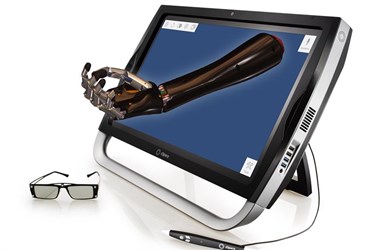
The education appears to be constrained to ‘flat’, 2D experiences, such as books and screens. According to educationalist, Edgar Dale, we retain around 10% of what we read, compared with 90% of what we experience ourselves. The promise of virtual (VR) and augmented reality (AR) has yet to break the conformity of ‘flat learning’, however, but, according to Dave Chavez, CTO of ZSpace, that’s all set to change with the development of what the company says is the world’s first AR/VR laptop.

The idea to place the ZSpace system in the classroom, however, was not the original drive for the company. Instead, the initial goal was to create a “comfortable” 3D display. Previously, 3D systems used Cathode Raid Tubes (CRTs) and shutter glasses comprising active electronics. The CRT contained an electron ‘gun’ which modulated, accelerated and deflected the electron beam that emanated from it onto a phosphorescent screen. The electronics in the glasses had polarisers that opened and closed, cutting the light off completely in one eye and then the other.
With AR/VR dipping in and out of the limelight, Chavez did admit that initially, it concerned him it was “just a fad”. However, after developing ZSpace he says his worries have disappeared. “We have created something really special,” he says. Despite not being able to reveal specifics of this joint project, Chavez did hint at the notion of a 3D web browser. “We’re heading into a world where screens won’t be flat, where the web won’t be flat,” he says, “and we are going to be a big part of that.” Although we are yet to see definitive studies detailing the benefits and results of long term use of VR/AR in education, most research concludes that engagement and user reactions has been positive.

Categories

machine (16) human (15) medical (13) mobile (12) digital (11) business (10) city (10) internet (10) operate (10) computer (9) graphics (9) electronics (8) power (8) water (8) workplace (8) cloud (7) robots (7) space (7) webpage (7) class (6) vehicles (5) solar (4) automation (3) battery (3) car (3) data (3) television (3) camera (2) building (1) government (1) satellite (1)

Ads

Featured Post