Sub menu editing

Drop Down MenusCSS Drop Down MenuPure CSS Dropdown Menu
Showing posts with label class. Show all posts

Saturday, June 1, 2019

Reinventing flat education


The education appears to be constrained to ‘flat’, 2D experiences, such as books and screens. According to educationalist, Edgar Dale, we retain around 10% of what we read, compared with 90% of what we experience ourselves. The promise of virtual (VR) and augmented reality (AR) has yet to break the conformity of ‘flat learning’, however, but, according to Dave Chavez, CTO of ZSpace, that’s all set to change with the development of what the company says is the world’s first AR/VR laptop.
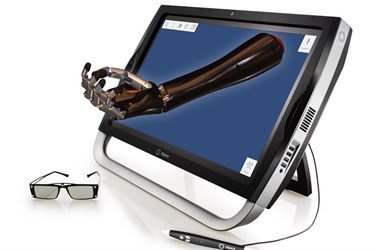
The idea to place the ZSpace system in the classroom, however, was not the original drive for the company. Instead, the initial goal was to create a “comfortable” 3D display. Previously, 3D systems used Cathode Raid Tubes (CRTs) and shutter glasses comprising active electronics. The CRT contained an electron ‘gun’ which modulated, accelerated and deflected the electron beam that emanated from it onto a phosphorescent screen. The electronics in the glasses had polarisers that opened and closed, cutting the light off completely in one eye and then the other.
With AR/VR dipping in and out of the limelight, Chavez did admit that initially, it concerned him it was “just a fad”. However, after developing ZSpace he says his worries have disappeared. “We have created something really special,” he says. Despite not being able to reveal specifics of this joint project, Chavez did hint at the notion of a 3D web browser. “We’re heading into a world where screens won’t be flat, where the web won’t be flat,” he says, “and we are going to be a big part of that.” Although we are yet to see definitive studies detailing the benefits and results of long term use of VR/AR in education, most research concludes that engagement and user reactions has been positive.

Wednesday, May 29, 2019

Student-Oriented Classes


     Teacher-oriented classes where students receive lectures from teachers will be out and student-centered learning will be in. Students will read, scrutinize text, work on applications and problems till they find the solution and come up with solutions and even definitions based on their activities. As they will have been actively involved in arriving at the solution, students will retain the lessons learned more effectively. Student-centered learning means inverting the traditional teacher-centered understanding of the learning process and putting students at the centre of the learning process. In the teacher-centered classroom, teachers are the primary source for knowledge.

A teaching Strategies to Create a Student-Centered Classroom. Today's teachers are moving more toward a student-centered classroom. They are learning to give up some of the control and allow students to be motivated by their interests, be part of the decision-making process, as well as all other aspects of their learning. Pros. Students learn important communicative and collaborative skills through group work. Students learn to direct their own learning, ask questions, and complete tasks independently. 


Students are more interested in learning activities when they can interact with one another and participate actively.Student centered learning only works for well-behaved children. Well-trained and reflective teachers can use student centered learning to create a classroom environment that engages active children and captures their interest. Once the engagement occurs, even the most boisterous child can focus and learn.

LessonCast


A Lessoncast is taking teacher preparation and professional development to the next level. A lessoncast is a short, 3-minute multimedia presentation, created by teachers for teachers. With a suite of easy-to-use tools and resources, users are guided through the process of creating interactive and engaging lessoncasts. In terms of teacher preparation, new instructors can now access clear and concise explanations of ideas and objectives, based on the advice and experience of senior teachers. The lessoncast can also be a great tool for teacher professional development, as it allows for easy collaboration between users. It can be used to demonstrate best practices and to showcase effective teaching strategies for specific areas.

Teachers need help and support with their lesson plans just as much as students need help with studying for exams. LessonCast allows teachers to submit a 2-minute lesson plan strategy, idea, or resource using video, documents, Powerpoint, etc. and share it with other instructors.The free-based software is just another way to offer networking opportunities and a general pool of knowledge that globally impacts education in a positive way. Teachers Paying Teachers is a similar network that allows educators to sell their lesson plans to other instructors.

The biggest advantage of a lessoncast is its short length. Limiting each clip to just 3 minutes ensures that teachers are engaged and focused while absorbing the material prepared by their peers. Viewers can easily grasp the important takeaways regarding specific topic areas and teaching techniques without excess information. Tools are available to help instructors establish clear learning expectations. Instructors can also attach a transcript of their recorded lesson, as well as supplementary resources that can be downloaded by viewers. Lessoncasts are great bite-sized resources for teacher preparation and professional development.

Monday, May 27, 2019

Flipped Classroom


A flipped classroom is an instructional strategy and a type of blended learning that reverses the traditional learning environment by delivering instructional content, often online, outside of the classroom. It moves activities, including those that may have traditionally been considered homework, into the classroom. While not a technology per se, this teaching model is using technology to change the way instructors teach. Rather than spending the class time lecturing the students, the lectures are delivered to the student’s in video format for them to watch at home (or in study hall).

Flipped learning is a pedagogical approach in which the conventional notion of classroom-based learning is inverted, so that students are introduced to the learning material before class, with classroom time then being used to deepen understanding through discussion with peers and problem-solving activities facilitated.
Then, the classroom time is set aside for 1 on 1 help, discussion, and interaction based on the lecture homework. With nearly every student carrying a mobile device or laptop, this model may give students and teachers more time to work on areas of difficulty rather than simple straight lecture. For too long, instructors have seen that precious class time go to waste while a teacher scribbles on a blackboard and has their back to the students.

Sunday, April 14, 2019

The beginning of the end of exams


           The beginning of the end of exams (AI in schools) in 2019, artificial intelligence will start continuously assessing students, making exams increasingly unnecessary. Normally we hear about AI in the context of driver-less cars or Amazon warehouses, but AI in schools is already a reality. Adaptive learning platforms, such as Century Tech, use algorithmic decision-making to deliver lesson content based on a student’s ability and interests.


            Teachers use ‘AI teaching assistant’ tools to optimist seating plans for behavior and learning. Even Ousted, the education regulator, is trialing AI algorithms to predict which schools are likely to fail inspections. Recent advances make continuous assessment by AI not only possible, but practical on a large scale — even for subjects without binary “right” or “wrong” answers. Advances in natural language processing mean that AI can analyse the content, structure and style of prose in an essay.


         Instead of examiners spending hours marking one essay at the end of the year, all essays throughout the year could be marked quickly and independently by AI. Already, 60,000 schools in China (a quarter of the country’s total) are part of an on-going government-sponsored trial in which essays have been quietly marked by an AI algorithm.

Thursday, April 4, 2019

Technology not replace Teachers


             Technology Will Not Replace Teachers. There is an onslaught of technology on the modern classroom. Teachers, administrators, parents, and students alike are being told that technology is the whetstone with which we can all sharpen our education system. Technology can open doors, expand minds, and change the world.


            The technology has, no doubts, brought a lot of relief for the human kind, but that doesn’t mean it can overpower or substitute humans. And, the major cause for this is its inability to interact with humans. Coming to the education sector, technology is undoubtedly a boon for many, as while on one hand, it does make learning easy for students, on the other it eases the teaching process for the teachers. There is an onslaught of technology on the modern classroom. Teachers, administrators, parents, and students alike are being told that technology is the whetstone with which we can all sharpen our education system.

              The technology can open doors, expand minds, and change the world. That may be true, but it’s not the panacea that it’s been made out to be. In fact, the influx of technology like iPads means there is a greater need for teachers. We need teachers who are part early adopter, part integrator, and part mad scientist. The modern teacher must be willing to take chances and able to figure out how not just how technology works, but how it works for each student, and where its use is most appropriate.

Categories

machine (16) human (15) medical (13) mobile (12) digital (11) business (10) city (10) internet (10) operate (10) computer (9) graphics (9) electronics (8) power (8) water (8) workplace (8) cloud (7) robots (7) space (7) webpage (7) class (6) vehicles (5) solar (4) automation (3) battery (3) car (3) data (3) television (3) camera (2) building (1) government (1) satellite (1)

Ads

Featured Post