Sub menu editing

Drop Down MenusCSS Drop Down MenuPure CSS Dropdown Menu
Showing posts with label robots. Show all posts

Monday, June 3, 2019

Machine Vision


Machine vision (MV) is the technology and methods used to provide imaging-based automatic inspection and analysis for such applications as automatic inspection, process control, and robot guidance, usually in industry. Machine vision is a term encompassing a large number of technologies, software and hardware products, integrated systems, actions, methods and expertise. Machine vision as a systems engineering discipline can be considered distinct from computer vision, a form of computer science. It attempts to integrate existing technologies in new ways and apply them to solve real world problems.

The overall machine vision process includes planning the details of the requirements and project, and then creating a solution. During run-time, the process starts with imaging, followed by automated analysis of the image and extraction of the required information. The information extracted can be a simple good-part/bad-part signal, or more a complex set of data such as the identity, position and orientation of each object in an image. The information can be used for such applications as automatic inspection and robot and process guidance in industry, for security monitoring and vehicle guidance.

            Machine vision is practically the only term used for these functions in industrial automation applications; the term is less universal for these functions in other environments such as security and vehicle guidance. Machine vision as a systems engineering discipline can be considered distinct from computer vision, a form of basic computer science; machine vision attempts to integrate existing technologies in new ways and apply them to solve real world problems in a way that meets the requirements of industrial automation and similar application areas. The term is also used in a broader sense by trade shows and trade groups such as the Automated Imaging Association and the European Machine Vision Association.

Wednesday, May 29, 2019

The Future of Consumer Robots


Consumer robots have been part of popular culture for decades, fueling visions of having robots living alongside humans in our homes to assist with daily tasks, entertain, educate, and socialize. However, the promise of consumer robotics remains largely unfulfilled. Cleaning robots, such as robotic vacuums, dominate the market and we are years away from widespread adoption of the robot types with which people have envisioned sharing their homes. However, there is renewed interest in consumer robotics with companies introducing new innovations and product categories. Additionally, traditional consumer robotics companies are actively using artificial intelligence (AI) to make their robots smarter and extend their capabilities while integrating with other smart home devices.

Robotic toys, which, until now, were largely gimmicky, are transforming into interactive and personalized connected play devices, as well as useful educational tools as a part of science, technology, engineering, and math (STEM)-based curriculum. According to Tractica’s latest robotics forecasting, worldwide sales of consumer robots reached $5.6 billion in 2018 and Tractica expects that the market will continue to experience strong growth over the next few years, reaching a market value of $19 billion by the end of 2025. Tractica forecasts that worldwide consumer robot unit shipments will increase from 15.4 million in 2018 to 65.9 million units annually by 2025.

This Tractica report examines the global market trends for consumer robots and provides market sizing and forecasts for shipments and revenue during the period from 2018 through 2025. The report focuses on crucial market drivers and challenges, in addition to assessing the most important technology issues that will influence market development. Market forecasts are segmented by world region and robot type, in addition to data on technology and connectivity attach rates.

Tuesday, May 28, 2019

Robotic surgery


Robotics, when combined with machine learning and AI, promise a marked improvement in surgical outcomes. According to a report from PwC that looked at the use of artificial intelligence and robotics in various sectors, healthcare was identified as being one of those with real potential when it came to the use of these technologies. An ageing population, together with more recent advances in sensors and wireless connectivity, along with much improved IT systems, mean than healthcare is now well placed to take advantage of the capabilities of robots and AI which are leading to the greater adoption of more automated systems.

According to the report AI could be used for the examination, diagnosis, and treatment of patients, for example, and could help clinicians to speed-up their decision making as well as help perform certain tasks more effectively and efficiently. The most striking potential, when it comes to the future deployment of robots, is in conducting the surgery itself.  A growing number of remotely-operated surgical robotic systems comprising of a surgeon’s console, robotic arms, monitoring systems and software are being used to assist in minimally invasive procedures, whether that’s carrying out stitching or inserting screws, and all achieved with much greater accuracy and with levels of dexterity beyond that of humans.

A growing number of remotely-operated surgical robotic systems comprising of a surgeon’s console, robotic arms, monitoring systems and software are being used to assist in minimally invasive procedures, whether that’s carrying out stitching or inserting screws, and all achieved with much greater accuracy and with levels of dexterity beyond that of humans. The da Vinci robotic surgery system is perhaps the best-known example of this kind of technology, with over 4,500 robots deployed worldwide. These robots are, however, more about manipulation than true surgical robotic systems. Nonetheless, the global surgical robotics market is growing strongly and research, from Allied Market Research, suggests that it is expected to top $98billion by 2024. The range of applications is also expected to continue to expand rapidly.


Sunday, May 26, 2019

Personal Robotics Will Become an Important New Category


The idea of a “sociable” robot—one that people can have relatively natural interactions with—has been the lore of science fiction for decades. From Lost in Space to Star Wars to WallE and beyond, interactive robotic machines have been the stuff of our creative imagination for some time. In 2019, however, I believe we will start to see more practical implementations of personal robotics devices from a number of major tech vendors. Amazon, for example, is widely rumored to be working on some type of personal assistant-based robot leveraging their Alexa voice-based digital assistant technology.


Exactly what form and what sort of capabilities the device might take are unclear, but some type of mobile (as in, able to move, not small and lightweight!) visual smart display that also offers mechanical capabilities (lifting, carrying, sweeping, etc.) might make sense. While a number of companies have tried and failed to bring personal robotics to the mainstream in the recent past, I believe a number of technologies and concepts are coming together to make the potential more viable this year. First, from a purely mechanical perspective, the scarily realistic capabilities now exhibited by companies like Boston Dynamics show how far the movement, motion, and environmental awareness capabilities have advanced in the robotics world.


In addition, the increasingly conversational and empathetic AI capabilities now being brought to voice-based digital assistants, such as Alexa and Google Assistant, demonstrate how our exchanges with machines are becoming more natural. Finally, the appeal of products like Sony’s updated Aibo robotic dog also highlight the willingness that people are starting to show towards interacting with machines in new ways.

Tuesday, April 30, 2019

Robotic Process Automation

      Robotic Process Automation (RPA) is an emerging form of business process automation technology based on the notion of software robots or artificial intelligence (AI) workers. RPA is the Application of technology that allows employees in a company to configure computer software or a “robot” to capture and interpret existing applications for processing a transaction, manipulating data, triggering responses and communicating with other digital systems.

   
             As RPA brings more technologically-advanced solutions to businesses around the world, operating models that adopt automation, whether in-house or offshored, will cut costs, drive efficiency and improve quality. Any company that uses labour on a large scale for general knowledge process work, where people are performing high-volume, highly transactional process functions, will boost their capabilities and save money and time with robotic process automation software.


           Just as industrial robots are remaking the manufacturing industry by creating higher production rates and improved quality, RPA “robots” are revolutionizing the way we think about and administer business processes, IT support processes, workflow processes, remote infrastructure and back-office work. RPA provides dramatic improvements in accuracy and cycle time and increased productivity in transaction processing while it elevates the nature of work by removing people from dull, repetitive tasks.The technology of RPA can be applied specifically to a wide range of industries.

Saturday, April 27, 2019

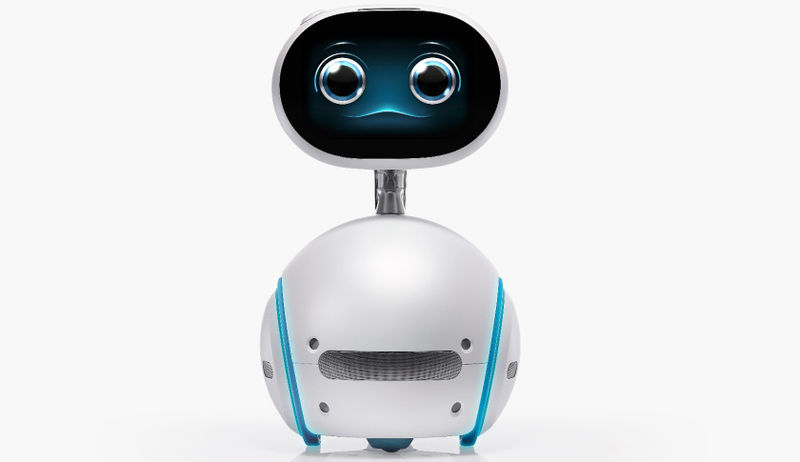
Robot Assistants


                   A robot that helps you with day-to-day household tasks, making your life easier. These little in-home companions serve a variety of purposes: everything from educational assistance to schedule organization. The robot has an endearing appearance, with a head complete with a touchscreen "face" and a small lower body that allows the robot to roll around. The home robot assistant can be used as a personal assistant that reminds homeowners of their appointments, schedules, medications and also can detect emergencies.


              When not being used as a screen for a variety of functions including taking pictures, revealing recipes and reading stories and songs to children, the robot has large eyes and dramatic facial expressions. Companies like Boston Dynamics have already developed a wide variety of robot assistants that can be used in factories or on the battlefield. The company originally started as an arm of MIT and has since pioneered the development of intelligent robots that operate effectively in the real world.

             Knightscope is another company working on a line of robot assistants for security applications. For example, its K5 robot features four cameras and can recognize 300 licenses plates per minute, per camera. It can also detect suspicious networks that may be operated by hackers.

Saturday, April 13, 2019

Robots May Start Moon Base Construction


            A recent NASA-sponsored report says two remote-controlled droids could build a landing site for a lunar outpost in less than six months—offering a safer, cheaper alternative to human-powered construction in the early phases of the project. NASA plans to have a moon base fully operational by 2024. One of the key challenges is first preparing a landing area, because the launchpads would have to protect nearby human habitation, to be built later, from being sandblasted by spacecraft.


            The researchers say they need more information about soil conditions at the lunar poles—the likeliest sites for an outpost—before they could build prototype construction robots. “NASA has identified blast debris from takeoffs and landings to be a hazard for its planned moon outpost,” said David Gump, president of Astrobotic Technology, Inc., which undertook the new study along with researchers from Carnegie Mellon University.


        “The problem is real, and the question is how NASA will choose to solve it”.  The study concludes that a pair of 330-pound (150-kilogram) robots the size of riding lawn mowers would best get the job done.Gump estimates that two of the bots plus the landing vehicle and pads would cost U.S. $200 to $300 million—and the robots could continue to provide value for the expense after the landing site is complete.

Categories

machine (16) human (15) medical (13) mobile (12) digital (11) business (10) city (10) internet (10) operate (10) computer (9) graphics (9) electronics (8) power (8) water (8) workplace (8) cloud (7) robots (7) space (7) webpage (7) class (6) vehicles (5) solar (4) automation (3) battery (3) car (3) data (3) television (3) camera (2) building (1) government (1) satellite (1)

Ads

Featured Post