Sub menu editing

Drop Down MenusCSS Drop Down MenuPure CSS Dropdown Menu

Monday, April 29, 2019

Angular and React


                Angular and React Training – Explore the Curriculum to Master Angular and React. There are JavaScript based Frameworks for creating modern web applications. Using React and Angular one can create a highly modular web app. So, you don’t need to go through a lot of changes in your code base for adding a new feature.


               The  angular and react also allows you to create a native mobile application with the same JS, CSS & HTML knowledge. Best part – Open source library with highly active community support. The comparison between these two technologies cannot be fully covered. Angular comes with a complete framework (MVC), while React is a fronted-library with lots of open-source packages to integrate with. 

               Overall, these technologies have made it much easier for developers to reuse, refactor, and maintain code by dividing things into modules/components. The goal of this article is not to find the best technology, but to compare, highlight, and clarify few misconceptions. We’ll also focus on what is important instead of minor details that do not really matter in the long-term.

Intelligent Apps (I – Apps)


                I-Apps are pieces of software written for mobile devices based on artificial intelligence and machine learning technology, aimed at making everyday tasks easier.This involves tasks like organizing and prioritizing emails, scheduling meetings, logging interactions, content, etc. Some familiar examples of I-Apps are Chatbots and virtual assistants.Technology has become the embedded component of applications and the defacto driver for growth in industries. With the advent of AI, new milestones are being achieved each day. 


             The next generation of mobile applications will be the result of multiple worlds colliding: when application development meets artificial intelligence, the Internet of Things and big data analytics, intelligent apps are the outcome. Put simply, these are apps that continually learn from user interactions and other data sources to become even more relevant and useful.

            We are moving towards an era of more and more integration, making it an indispensable mediator between systems and humans. The rapid strides taken by mobile industry, seems like an overwhelming convergence of multiple worlds. The innate ability of such systems to improve itself, strengthened by data analytics, IoT and AI have opened new frontiers. To reap the unbound merits of AI, software application vendors are integrating it into software applications. It is literally the dawn of intelligent applications.

Digitaltwins


           Digital twin refers to a digital replica of physical assets (physical twin), processes, people, places, systems and devices that can be used for various purposes. The digital representation provides both the elements and the dynamics of how an Internet of things device operates and lives throughout its life cycle. A digital twin refers to the digital representation of a real-world entity or system. By 2020, Gartner estimates there will be more than 20 billion connected sensors and endpoints and digital twins will exist for potentially billions of things.


             Organisations will implement digital twins simply at first. They will evolve them over time, improving their ability to collect and visualise the right data, apply the right analytics and rules, and respond effectively to business objectives. “One aspect of the digital twin evolution that moves beyond IoT will be enterprises implementing digital twins of their organisations (DTOs).

             A DTO is a dynamic software model that relies on operational or other data to understand how an organisation operationalises its business model, connects with its current state, deploys resources and responds to changes to deliver expected customer value,” says Cearley. “DTOs help drive efficiencies in business processes, as well as create more flexible, dynamic and responsive processes that can potentially react to changing conditions automatically.”

Companies will need Data Ethicists


            2019 will be the year that companies hire a “data ethicist,” says Gil Elbaz, CEO of Factual, a location data provider. “As more and more decisions are made using AI, the teams amassed to build, test, and teach that software are growing as well,” he says. “The smarter these systems become, the more important it is that they’re designed with the needs of, and respect for, humanity in mind. It’s difficult, if not impossible, to program a machine to understand a human ethic.” Companies will solve this by hiring a data ethicist.


            The ability for a business to operate based on some amount of intelligence is not new. Even before business owners used manual techniques such as writing customer orders in a book or using calculators to help forecast how many pounds of potatoes might be needed to stock up for next week's sales, there were forms of "insight searching." Enterprises are always looking for operational efficiencies, and today they are gathering more intelligence exponentially.

         A significant part of business intelligence is understanding customers. The more data a company has about its current or prospective customers' wants, likes, dislikes, behaviors, activities, and lifestyle, the more intelligence that business can generate. “The technology is ultimately responsible for making a decision, but the steps it took to get there will be informed by data scientists programming with human ethics in mind,” Elbaz says. In principle, more data suggests the possibility of more intelligence.

Saturday, April 27, 2019

Quantum Computing


               The typical computer uses a series of zeros and ones to communicate information. While today's computers are quite powerful, they still have considerable limitations that make it difficult to process challenging machine-learning problems.


               Quantum computers rely on quantum bits to carry information. These bits can exist in a state which allow quantum computers to process challenging datasets much better than traditional computers do. As a result, quantum computing can help to produce serious machine-learning breakthroughs that might otherwise be impossible solve.

           While the technology is still in its early stages, companies like Microsoft and Google are investing billions in developing supercomputers capable of developing highly accurate predictive models. These models can be used in everything from self-driving cars to marketing campaigns.

Crispr


               Imagine a world where crushing genetic diseases like Huntington's and cystic fibrosis can be cured. Thanks to crispr, genetic disease may be eliminated.


         CRISPR Cas-9 (an abbreviation standing for "Clustered Regularly Interspaced Short Palindromic Repeats") is a gene-splicing technology capable of finding and removing mutated sections of DNA. Once this material is eliminated, crispr technology can replace the mutated sections with non-mutated variants.

                  As a result, crispr has the power to permanently eliminate certain types of genetic diseases from blood lines. The technology has already been used to eliminate cancer in some patients, and early results show that it may be possible to cure genetically caused blindness as well.

Robot Assistants


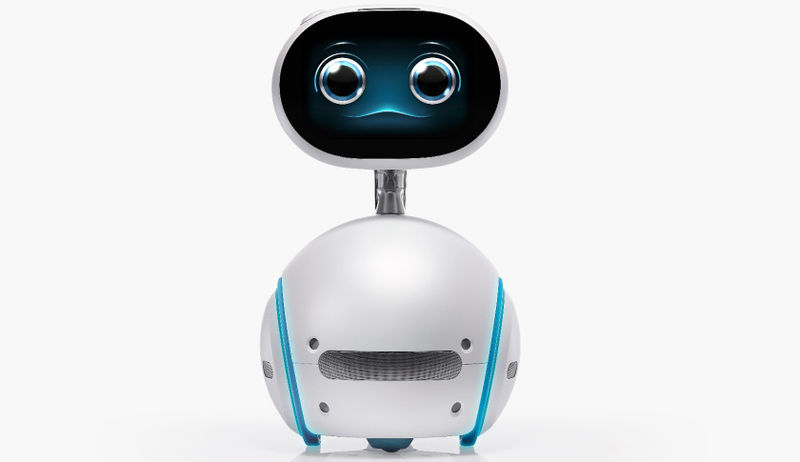
                   A robot that helps you with day-to-day household tasks, making your life easier. These little in-home companions serve a variety of purposes: everything from educational assistance to schedule organization. The robot has an endearing appearance, with a head complete with a touchscreen "face" and a small lower body that allows the robot to roll around. The home robot assistant can be used as a personal assistant that reminds homeowners of their appointments, schedules, medications and also can detect emergencies.


              When not being used as a screen for a variety of functions including taking pictures, revealing recipes and reading stories and songs to children, the robot has large eyes and dramatic facial expressions. Companies like Boston Dynamics have already developed a wide variety of robot assistants that can be used in factories or on the battlefield. The company originally started as an arm of MIT and has since pioneered the development of intelligent robots that operate effectively in the real world.

             Knightscope is another company working on a line of robot assistants for security applications. For example, its K5 robot features four cameras and can recognize 300 licenses plates per minute, per camera. It can also detect suspicious networks that may be operated by hackers.

Categories

machine (16) human (15) medical (13) mobile (12) digital (11) business (10) city (10) internet (10) operate (10) computer (9) graphics (9) electronics (8) power (8) water (8) workplace (8) cloud (7) robots (7) space (7) webpage (7) class (6) vehicles (5) solar (4) automation (3) battery (3) car (3) data (3) television (3) camera (2) building (1) government (1) satellite (1)

Ads

Featured Post