Sub menu editing

Drop Down MenusCSS Drop Down MenuPure CSS Dropdown Menu

Monday, April 29, 2019

Companies will need Data Ethicists


            2019 will be the year that companies hire a “data ethicist,” says Gil Elbaz, CEO of Factual, a location data provider. “As more and more decisions are made using AI, the teams amassed to build, test, and teach that software are growing as well,” he says. “The smarter these systems become, the more important it is that they’re designed with the needs of, and respect for, humanity in mind. It’s difficult, if not impossible, to program a machine to understand a human ethic.” Companies will solve this by hiring a data ethicist.


            The ability for a business to operate based on some amount of intelligence is not new. Even before business owners used manual techniques such as writing customer orders in a book or using calculators to help forecast how many pounds of potatoes might be needed to stock up for next week's sales, there were forms of "insight searching." Enterprises are always looking for operational efficiencies, and today they are gathering more intelligence exponentially.

         A significant part of business intelligence is understanding customers. The more data a company has about its current or prospective customers' wants, likes, dislikes, behaviors, activities, and lifestyle, the more intelligence that business can generate. “The technology is ultimately responsible for making a decision, but the steps it took to get there will be informed by data scientists programming with human ethics in mind,” Elbaz says. In principle, more data suggests the possibility of more intelligence.

Saturday, April 27, 2019

Quantum Computing


               The typical computer uses a series of zeros and ones to communicate information. While today's computers are quite powerful, they still have considerable limitations that make it difficult to process challenging machine-learning problems.


               Quantum computers rely on quantum bits to carry information. These bits can exist in a state which allow quantum computers to process challenging datasets much better than traditional computers do. As a result, quantum computing can help to produce serious machine-learning breakthroughs that might otherwise be impossible solve.

           While the technology is still in its early stages, companies like Microsoft and Google are investing billions in developing supercomputers capable of developing highly accurate predictive models. These models can be used in everything from self-driving cars to marketing campaigns.

Crispr


               Imagine a world where crushing genetic diseases like Huntington's and cystic fibrosis can be cured. Thanks to crispr, genetic disease may be eliminated.


         CRISPR Cas-9 (an abbreviation standing for "Clustered Regularly Interspaced Short Palindromic Repeats") is a gene-splicing technology capable of finding and removing mutated sections of DNA. Once this material is eliminated, crispr technology can replace the mutated sections with non-mutated variants.

                  As a result, crispr has the power to permanently eliminate certain types of genetic diseases from blood lines. The technology has already been used to eliminate cancer in some patients, and early results show that it may be possible to cure genetically caused blindness as well.

Robot Assistants


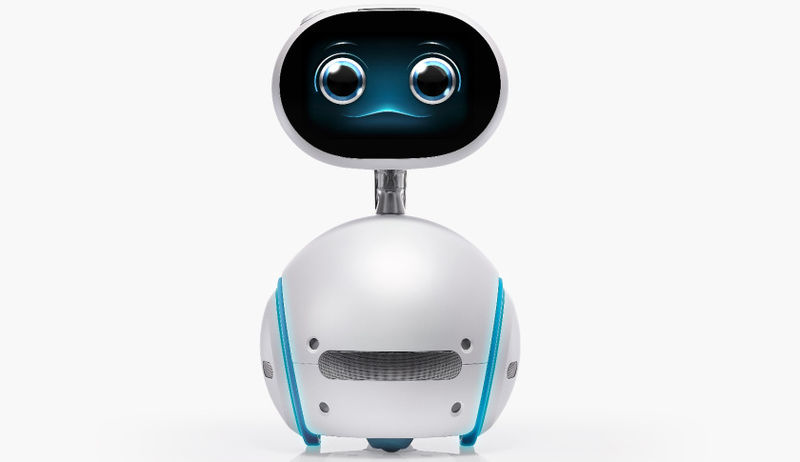
                   A robot that helps you with day-to-day household tasks, making your life easier. These little in-home companions serve a variety of purposes: everything from educational assistance to schedule organization. The robot has an endearing appearance, with a head complete with a touchscreen "face" and a small lower body that allows the robot to roll around. The home robot assistant can be used as a personal assistant that reminds homeowners of their appointments, schedules, medications and also can detect emergencies.


              When not being used as a screen for a variety of functions including taking pictures, revealing recipes and reading stories and songs to children, the robot has large eyes and dramatic facial expressions. Companies like Boston Dynamics have already developed a wide variety of robot assistants that can be used in factories or on the battlefield. The company originally started as an arm of MIT and has since pioneered the development of intelligent robots that operate effectively in the real world.

             Knightscope is another company working on a line of robot assistants for security applications. For example, its K5 robot features four cameras and can recognize 300 licenses plates per minute, per camera. It can also detect suspicious networks that may be operated by hackers.

Regenerative Medicine


            Regenerative medicine is a branch of translational research in tissue engineering and molecular biology which deals with the "process of replacing, engineering or regenerating human cells, tissues or organs to restore or establish normal function". The promising field of Regenerative Medicine is working to restore structure and function of damaged tissues and organs.


              The goal of this medicine is to find a way to cure previously untreatable injuries and diseases. Scientific research is working to make treatments available for clinical use.Though it may sound like science fiction, doctors are already producing made-to-order body parts. To get started, doctors scrape cells off the body part in question and grow them in a petri dish.

                   In time, the body part grows strong enough that it can be implanted inside the patient.One company, Organovo, has developed a printer capable of 3D printing body parts. In time, this new technology will become increasingly mainstream, providing patients with lifesaving organ replacements.

Augmented and Mixed Reality


                Augmented  reality there is a digital overlay of the reality that we live in day to day. With Mixed Reality you have the digital overlay of the reality we live in but there is interaction within the overlay. Mixed Reality is the very new of the terms mentioned. Mixed Reality takes the augmented and virtually displayed the information and later adds it to the real world.


            Just a few years ago, it was unclear whether augmented or mixed reality would take off. Given the fact that tech giants like Apple are investing billions of dollars in augmented reality hardware, it's pretty clear that it's only a matter of time before the tech goes mainstream.

             For example, Apple's latest phones are equipped with augmented reality capabilities, and a recent report suggests that the company is working on an AR headset that will replace the iPhone in two to three years.

Voice Assistants


            In four years, the majority of American households are expected to own a voice assistant device like an Amazon Echo or an Apple Homepod. Thanks to the power of artificial intelligence (AI), voice assistants will grow increasingly helpful.


               Even today, Amazon releases regular updates to Echo in order to help owners get more from the technology. The company recently reported seeing larger-than-expected gains from its voice assistant, which is why Amazon is now doubling down on the technology.

          Voice assistants are making a significant impact in markets across the globe, and some observers expect that in the future we will communicate with technology through voice rather than text.


Categories

machine (16) human (15) medical (13) mobile (12) digital (11) business (10) city (10) internet (10) operate (10) computer (9) graphics (9) electronics (8) power (8) water (8) workplace (8) cloud (7) robots (7) space (7) webpage (7) class (6) vehicles (5) solar (4) automation (3) battery (3) car (3) data (3) television (3) camera (2) building (1) government (1) satellite (1)

Ads

Featured Post